
Why Discipline Fails (Even When You Know What To Do)
The uncomfortable truth about why most people stay stuck — and why information alone never changes behavior.
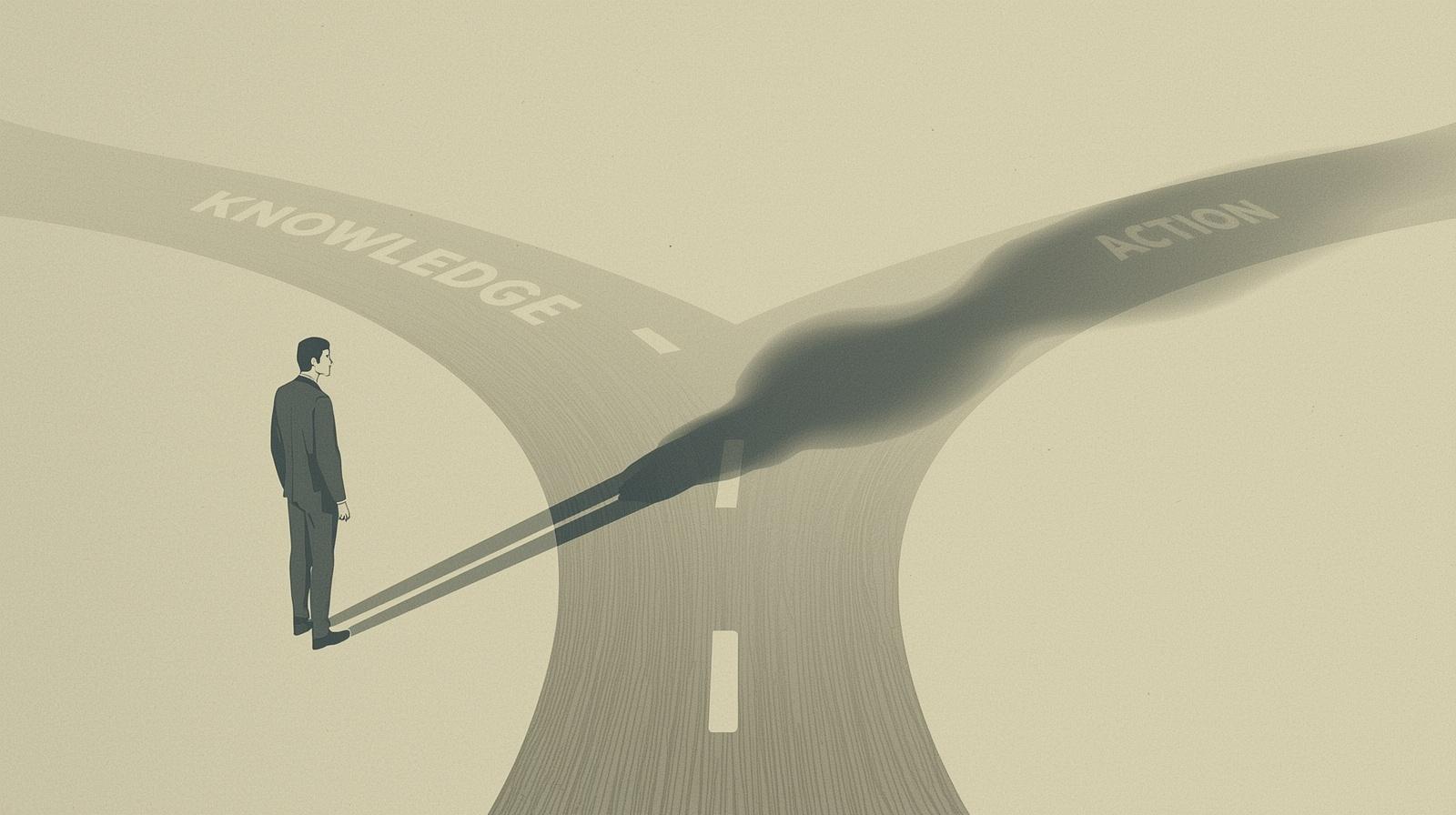
You already know what to do.
You know you should save more money, avoid emotional trading, follow your plan, exercise consistently, and stop making impulsive decisions when you are tired, stressed, or excited.
So why do intelligent people still fail?
The uncomfortable answer is this:
Most people do not fail because they lack information. They fail because their environment, emotions, and systems keep pulling them back into old behavior.
The Discipline Lie
Most people believe discipline is a personality trait.
They look at someone consistent and assume that person simply has more willpower. More strength. More mental toughness.
But research on self-control suggests something more interesting: people with strong self-control are often not constantly fighting temptation. They are better at avoiding situations where temptation becomes a problem in the first place.
In other words, disciplined people often do not win because they resist better. They win because they design better systems.
This matters deeply in trading, business, health, and personal finance.
Why Knowing What To Do Is Not Enough
Information feels powerful because it gives us clarity.
But clarity is not the same as execution.
A trader may know the rules of a strategy and still break them after three losses in a row.
A person may know they should invest consistently and still spend the money on things they do not really need.
An entrepreneur may know they should focus on one project and still jump into five new ideas because excitement feels productive.
The problem is not always knowledge.
The problem is that important decisions are often made in emotional states.
- Fear makes you close trades too early.
- Greed makes you increase risk.
- Boredom makes you overtrade.
- Anxiety makes you abandon long-term plans.
- Excitement makes you overcommit to new projects.
If your system depends on making perfect decisions while emotional, the system is weak.
The Real Enemy: Emotional Decision-Making
Most bad decisions do not feel bad in the moment.
They feel justified.
The trader who breaks risk management usually has a reason:
“This setup looks stronger.”
“I just need to recover the previous loss.”
“The market is about to move.”
The person who overspends also has a reason:
“I deserve it.”
“It is just this one time.”
“I will compensate next month.”
The mind is very good at creating intelligent explanations for emotional decisions.
That is why discipline alone is unreliable.
What Research Suggests About Self-Control
Psychology research has been moving away from the simple idea that success is only about resisting temptation with raw willpower.
Studies on self-control suggest that people with higher self-control often use habits, routines, and environmental design to reduce the need for constant resistance. One study found that beneficial habits helped explain the relationship between self-control and positive outcomes in areas like healthy eating, exercise, and sleep.
Another line of research suggests that high self-control is associated with avoiding temptation rather than merely resisting it once it appears.
This is powerful because it changes the question.
Instead of asking:
“How can I become more disciplined?”
Ask:
“How can I design a system where the right behavior becomes easier and the wrong behavior becomes harder?”
Habits Take Longer Than Motivation
Many people believe habits can be built in 21 days.
That idea is popular, but real habit formation is more variable.
A well-known study from University College London found that, on average, it took about 66 days for a new behavior to become automatic, with wide variation depending on the person and the behavior.
This matters because people often quit too early.
They start a new trading routine, savings plan, workout habit, or business system and expect it to feel natural after two weeks.
When it still feels difficult, they think something is wrong with them.
But maybe nothing is wrong.
Maybe the system simply has not had enough repetitions yet.
The Trading Example: Why Rules Are Not Enough
Trading is one of the best mirrors of human psychology.
It exposes impatience, fear, greed, ego, and the need to be right.
A trader can have a profitable strategy and still lose money because the execution system is weak.
For example:
- The strategy allows only one trade per day.
- The trader takes one valid trade.
- The trade loses.
- The trader feels frustration.
- The trader takes another trade outside the plan.
- The second trade loses too.
- Now the trader believes the strategy failed.
But the strategy did not fail.
The system around the trader failed.
There was no protection against revenge trading.
There was no rule to stop trading after emotional activation.
There was no pre-defined process for dealing with losses.
This is why trading education that only teaches setups is incomplete.
A setup can tell you where to enter.
But a system tells you how to behave.
The Money Example: Why Income Alone Does Not Create Wealth
The same principle applies to personal finance.
Many people believe they need more income to become financially stable.
Sometimes that is true.
But many people increase their income and still feel trapped because their spending system grows at the same speed.
More money without better systems often creates more expensive problems.
A better system could look like this:
- Automatic saving before spending.
- Clear monthly spending limits.
- No new debt unless it serves a strategic purpose.
- Separate accounts for needs, growth, investing, and enjoyment.
- Weekly review instead of emotional decision-making.
Wealth is not only built by earning more.
It is built by protecting the gap between what you earn and what you spend.
The Project Example: Why Excitement Can Be Dangerous
There is another hidden problem: excitement.
Excitement feels positive, but it can also create bad decisions.
When you believe deeply in a project, you may start investing too much, too fast, before the market gives you real evidence.
You may confuse potential with validation.
You may think:
“This has to work.”
But business does not reward belief alone.
Business rewards useful offers, clear positioning, consistent distribution, and real customer demand.
That is why a good system asks:
- What is the smallest version I can test?
- What signal would prove this is working?
- How much can I risk without hurting my family or peace?
- What would make me stop or adjust?
This protects you from turning ambition into pressure.
The 4-System Rule
If discipline keeps failing, do not start by blaming yourself.
Start by auditing your systems.
1. Remove friction from good behavior
Make the right action easy.
If you want to invest consistently, automate it.
If you want to study, keep your learning material ready.
If you want to follow a trading plan, define the plan before the market opens.
The more steps required, the more likely emotion will interrupt the process.
2. Add friction to bad behavior
Make the wrong action harder.
For trading, this could mean setting a maximum daily loss, limiting trading sessions, or disabling trading after a rule violation.
For money, it could mean removing saved cards, creating spending limits, or separating investment money from daily spending money.
Bad habits survive because they are convenient.
Make them inconvenient.
3. Predefine decisions before emotions appear
Implementation intention research shows that behavior improves when people decide in advance what they will do in a specific situation.
This is often called an “if-then” plan.
Examples:
- If I lose two trades in one day, then I stop trading.
- If I receive my salary, then I invest before spending.
- If I feel excited about a new project, then I wait 48 hours before spending money.
- If I want to buy something unnecessary, then I add it to a waiting list instead of buying immediately.
The goal is simple:
Make important decisions before your emotions are in control.
4. Track behavior, not intentions
Intentions are easy.
Behavior is truth.
Do not only ask:
“Am I motivated?”
Ask:
- Did I follow the rule?
- Did I protect my capital?
- Did I stay inside my budget?
- Did I publish the content?
- Did I repeat the system this week?
Your life changes when you stop measuring how inspired you feel and start measuring what you actually repeat.
Systems Over Motivation
Motivation is useful, but it is unstable.
Some days you will feel strong.
Some days you will feel tired.
Some days you will feel focused.
Some days you will want to quit.
If your plan only works when you feel motivated, it is not a reliable plan.
A good system works even when motivation is low.
That does not mean you become robotic.
It means you respect the fact that you are human.
Humans get tired.
Humans get emotional.
Humans rationalize bad decisions.
Systems exist to protect us from our weakest moments.
A Practical Framework You Can Use Today
Choose one area of your life where discipline is failing.
Then answer these five questions:
- What behavior do I keep repeating even though I know it hurts me?
- What emotion usually appears before that behavior?
- What environment makes that behavior easy?
- What rule could I define before the emotion appears?
- What small system can I build this week to make the right action easier?
Do not try to redesign your whole life in one day.
Start with one system.
One habit.
One rule.
One repeated behavior.
That is how change compounds.
My Personal Perspective
One of the biggest mistakes I made in life was believing too much in my own projects before they had earned that belief.
I used to go all in.
When I believed in something, I wanted to give everything.
That mindset created progress, but it also created debt, pressure, and hard lessons.
Over time, I learned that ambition needs structure.
Purpose needs patience.
And belief needs evidence.
Today, I still believe in building big things.
But I want to build them in a way that protects my family, my peace, and my long-term future.
That is the real role of systems.
They do not kill ambition.
They make ambition sustainable.
Final Thoughts
If discipline keeps failing, maybe the problem is not that you are weak.
Maybe the problem is that your system depends too much on willpower.
And willpower is not a stable foundation.
Build systems that reduce emotional decisions.
Design environments that make good behavior easier.
Use rules before emotions appear.
Track what you repeat.
Because in the long run, success is rarely the result of one intense moment.
It is usually the result of repeated behavior protected by good systems.
References
- Galla & Duckworth — More than Resisting Temptation: Beneficial Habits Mediate the Relationship Between Self-Control and Positive Life Outcomes
- Ent et al. — Trait Self-Control and the Avoidance of Temptation
- Lally et al. — How Are Habits Formed: Modelling Habit Formation in the Real World
- University College London — How Long Does It Take to Form a Habit?
- Carrero et al. — A Meta-Analysis of Implementation Intentions
Newsletter
Keep Building Your Systematic Mind
Get one thoughtful Insight every week on trading, psychology, systems, and long-term growth.
No hype. No shortcuts. Just practical ideas that compound over time.